
First UK case of ultra-deadly monkeypox strain hits London patient
A case of the new Clade 1b monkeypox which has ripped through several African countries has been detected in London, the first in Britain.
The unnamed patient was on holiday in an Africa country currently experiencing an outbreak earlier this month.
They developed flu like symptoms on October 21 they then developed a rash three days later.
Seeking medical advice the case was flagged with the NHS and UK Health Security Agency (UKHSA) as potentially being the new mpox strain of concern.
Laboratory testing confirmed the patient did indeed have the infection and they are currently being treated by specialist staff at the infectious diseases at the Royal Free Hospital in London.
No further details on the patient’s condition have been revealed.
UKHSA said they are currently tracing ‘less than 10’ people who are believed to have been in close contact with the patient during the potential period he was infectious.
Officials currently do not suspect the patient was infectious on the flight back from the, as yet unnamed African country, they contracted the disease from.
How the patient got the new strain of mpox, which can kill about one in 20 adults it infects, is currently unknown, though skin-to-skin contact is suspected.
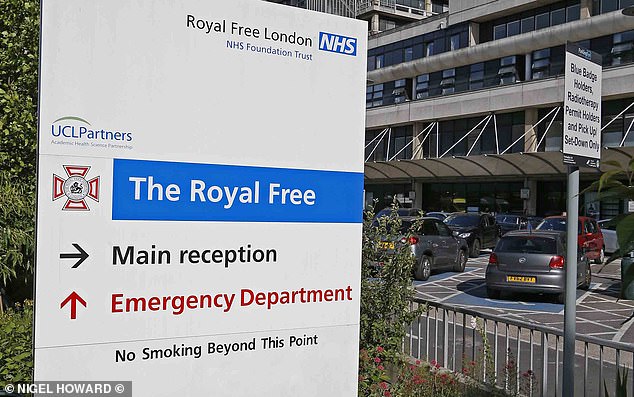
The patient is currently being treated by specialist staff at the infectious diseases at the Royal Free Hospital in London

UKHSA said they are currently in conversation with their counterparts in the African nation for contact tracing purposes there and thus are not revealing which exact nation it is.
Officials say they still consider the threat Clade 1b poses to the public as low.
Professor Susan Hopkins, Chief Medical Adviser at UKHSA, said: ‘It is thanks to our surveillance that we have been able to detect this virus. This is the first time we have detected this Clade of mpox in the UK, though other cases have been confirmed abroad.
‘The risk to the UK population remains low, and we are working rapidly to trace close contacts and reduce the risk of any potential spread. In accordance with established protocols, investigations are underway to learn how the individual acquired the infection and to assess whether there are any further associated cases.’
Health and Social Care Secretary Wes Streeting said: ‘I am extremely grateful to the healthcare professionals who are carrying out incredible work to support and care for the patient affected.
‘The overall risk to the UK population currently remains low and the government is working alongside UKHSA and the NHS to protect the public and prevent transmission.
‘This includes securing vaccines and equipping healthcare professionals with the guidance and tools they need to respond to cases safely.
‘We are also working with our international partners to support affected countries to prevent further outbreaks.’
Steve Russell, NHS national director for vaccination and screening, said: ‘The NHS is fully prepared to respond to the first confirmed case of this clade of mpox.
‘Since mpox first became present in England, local services have pulled out all the stops to vaccinate those eligible, with tens of thousands in priority groups having already come forward to get protected, and while the risk of catching mpox in the UK remains low, if required the NHS has plans in place to expand the roll out of vaccines quickly in line with supply.’
Clade 1b has swept through central Africa killing hundreds, especially in countries like the Democratic Republic of Congo, since the outbreak began.
Cases have also been spotted in Burundi, Rwanda, Uganda, Kenya as well as in European countries such as Sweden, India and Germany.

A woman cares her baby suffering from a severe form of mpox in eastern Democratic Republic of Congo
It is considered far more deadlier than the clade 2 strain which spread globally in 2022 and primarily hit gay and bisexual men.
Clade 1b is estimated to kill about 5 per cent of adults who contract it, but the mortality rate rises to one in 10 in children.
In comparison, clade 2 only killed roughly about one in every 500 people that caught it.
However experts have said fatality rates for clade 1b from central Africa are unlikely to be replicated in developed nations like the UK due to better access to higher quality healthcare.
Common symptoms of mpox include a skin rash or pus-filled lesions which can last two to four weeks.
The infection is mainly passed through close person-to-person contact with someone who is infected or through contact with contaminated materials such as bedsheets.
Anyone with symptoms should continue to avoid contact with other people while symptoms persist.
It can also cause fever, headaches, muscle aches, back pain, low energy and swollen lymph nodes.
UKHSA also said they are securing more supplies of mpox vaccines as part of further roll out of the jab.