
Unveiled by Ancient DNA: The True Timeline of Human-Neanderthal Interbreeding
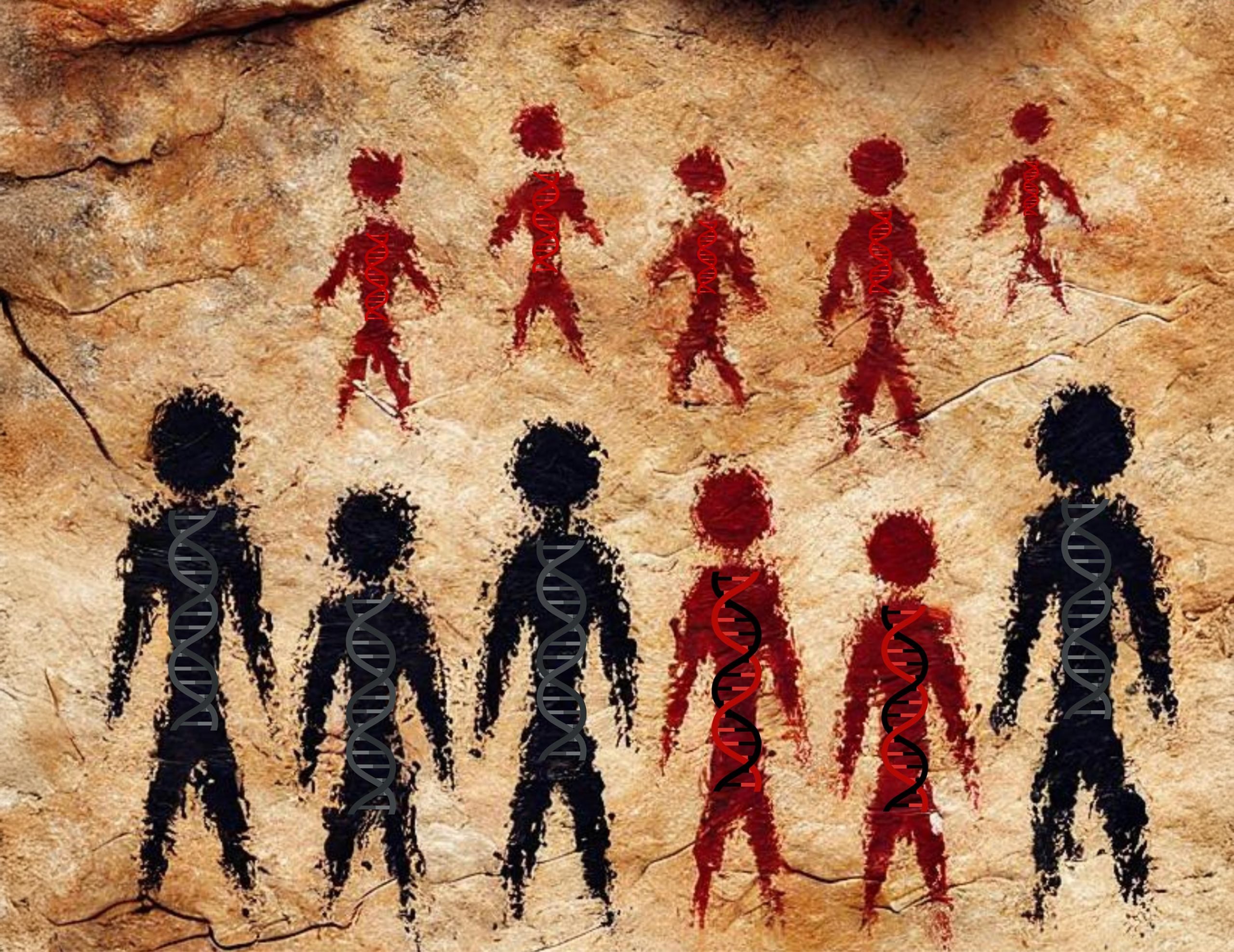
Surviving Neanderthal genes in the modern genome tell a story of thousands of years of interactions.
Recent The longer duration of gene flow may help explain, for example, why East Asians have about 20% more Neanderthal genes than Europeans and West Asians. If modern humans moved eastward about 47,000 years ago, as archeological sites suggest, they would already have had intermixed Neanderthal genes. “We show that the period of mixing was quite complex and may have taken a long time. Different groups could have separated during the 6,000- to 7,000-year period, and some groups may have continued mixing for a longer period of time,” Peter said. “But a single shared period of gene flow fits the data best.” “One of the main findings is the precise estimate of the timing of Neanderthal admixture, which was previously estimated using single ancient samples or samples from present-day individuals. Nobody had tried to model all of the ancient samples together,” Chintalapati said. “This allowed us to build a more complete picture of the past.” In 2016, Moorjani pioneered a method for inferring the timing of Neanderthal gene flow using often incomplete genomes of ancient individuals. At that time, only five archaic Homo sapiens genomes were available. For the new study, Iasi, Chintalapati, and their colleagues employed this technique with 58 previously sequenced genomes of ancient Homo sapiens who lived in Europe, Western and Central Asia over the past 45,000 years and the genomes of 275 contemporary humans worldwide to provide a more precise date — 47,000 years ago. Rather than assuming the gene flow occurred in a single generation, they tried more complex models developed by Iasi and Peter to establish that the interbreeding extended over about 7,000 years, rather than being intermittent. The timing of the interbreeding between Neanderthals and modern humans was corroborated by another, independent study conducted by MPI-EVA researchers and is scheduled to be published Dec. 12 in the journal Nature. That study, an analysis of two newly sequenced genomes of Homo sapiens that lived about 45,000 years ago, also found a date of 47,000 years ago. “Although the ancient genomes were published in previous studies, they had not been analyzed to look at Neanderthal ancestry in this detailed way. We created a catalog of Neanderthal ancestry segments in modern humans. By jointly analyzing all these samples together, we inferred the period of gene flow was around 7,000 years,” Chintalapati said. “The Max Planck group actually sequenced new ancient DNA samples that allowed them to date the Neanderthal gene flow directly. And they came up with a similar timing as us.” The UC Berkeley/MPI-EVA team also analyzed regions of the modern human genome that contain genes inherited from Neanderthals and some areas that are totally devoid of Neanderthal genes. They found that areas lacking any Neanderthal genes, so-called archaic or Neanderthal deserts, developed quickly after the two groups interbred, suggesting that some Neanderthal gene variants in those areas of the genome must have been lethal to modern humans. Early modern human samples that are older than 40,000 years already contained these deserts in their genomes. “We find that very early modern humans from 40,000 years ago don’t have any ancestry in the deserts, so these deserts may have formed very rapidly after the gene flow,” said Iasi. “We also looked at the changes in Neanderthal ancestry frequency over time and across the genome and found regions that are present at high frequency, possibly because they carry beneficial variants that were introgressed from Neanderthals.” Most of the high-frequency Neanderthal genes are related to immune function, skin pigmentation, and metabolism, as reported in some previous studies. One immune gene variant inherited from Neanderthals confers protective effects to the coronavirus that causes DOI: 10.1126/science.adq3010 Other co-authors of the Science paper were postdoctoral fellow Laurits Skov of UC Berkeley and Alba Bossoms Mesa and Mateja Hajdinjak of MPI-EVA. Moorjani’s research was supported by the Burroughs Wellcome Fund and the Read More
Analyzing Neanderthal Genes in Modern Humans
Independent Confirmation of Findings
The Emergence of Neanderthal Deserts
Adaptive Benefits of Neanderthal Genes