
How Venezuela’s aging Soviet-era military stacks up next to US forces in the Caribbean |
The build-up of US naval forces in the Caribbean, boosted by the recent arrival near Latin America of the USS Gerald R. Ford aircraft carrier, has raised speculation that both the US and Venezuela may be preparing for a larger conflict.
While the US has characterized the build-up as aimed at combating drug trafficking, some experts have questioned why so much firepower is needed if the sole aim is targeting drug boats – noting that the ship’s arrival marks the largest US military presence in the region since the invasion of Panama in 1989.
In addition to the aircraft carrier itself – described as the US Navy’s “most lethal combat platform” – the US has amassed roughly 15,000 personnel in the region alongside more than a dozen warships – including a cruiser, destroyers, an air and missile defense command ship, and amphibious assault vessels – and an attack submarine. It has also deployed 10 F-35 fighter jets to Puerto Rico, which has become a hub for the US military as part of the increased focus on the Caribbean.
That sort of firepower brings into sharp relief what experts characterize as the aging Soviet-era equipment Venezuela would be relying on if US President Donald Trump were to decide on military action inside the country.
Here’s what we know about the forces at Caracas’ disposal:
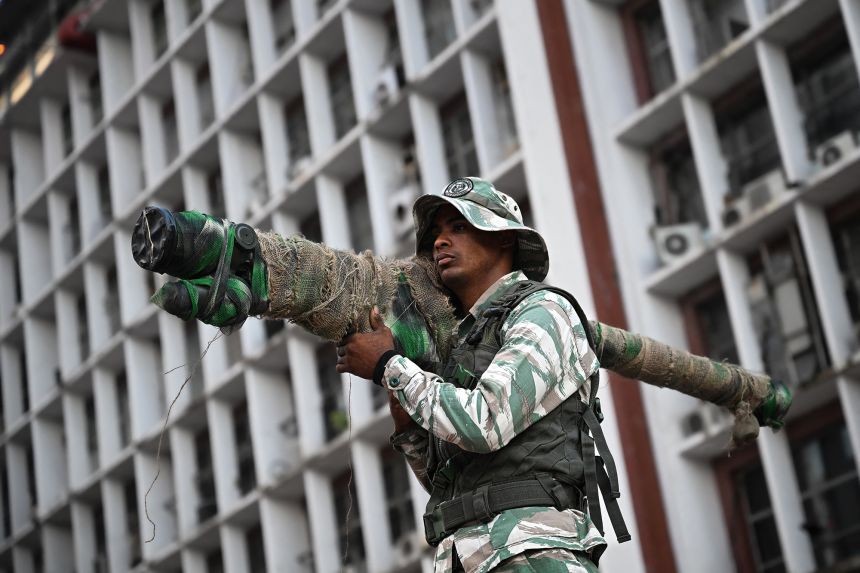
Venezuela’s conventional military, the Bolivarian National Armed Forces (FANB), has built a reputation over the past two decades as a regional military power a cut above most of its neighbors in Latin America.
Much of that image was forged through the sustained acquisition of Russian equipment under Maduro’s predecessor the late President Hugo Chávez, a former professional soldier who owed his ascent to power to the revolutionary movement he founded within the Armed Forces.
After Chávez became president in 1999 (seven years after he organized a failed military coup), he funneled the country’s massive oil resources into the Armed Forces, buying Russian equipment due to an informal US embargo, and placing military men into key government positions.
As a result of this, weapons systems such as Su-30 fighter jets, T-72 battle tanks, S-300, Pechora and Buk anti-aircraft missiles, portable Igla-S systems, and Kalashnikov rifles – all designed in Soviet times, have come to define the FANB’s image, distinguishing it from other militaries in the region, which tend to rely more heavily on US or European weaponry (though Venezuela still has some ageing US-designed equipment from pre-Chávez days).
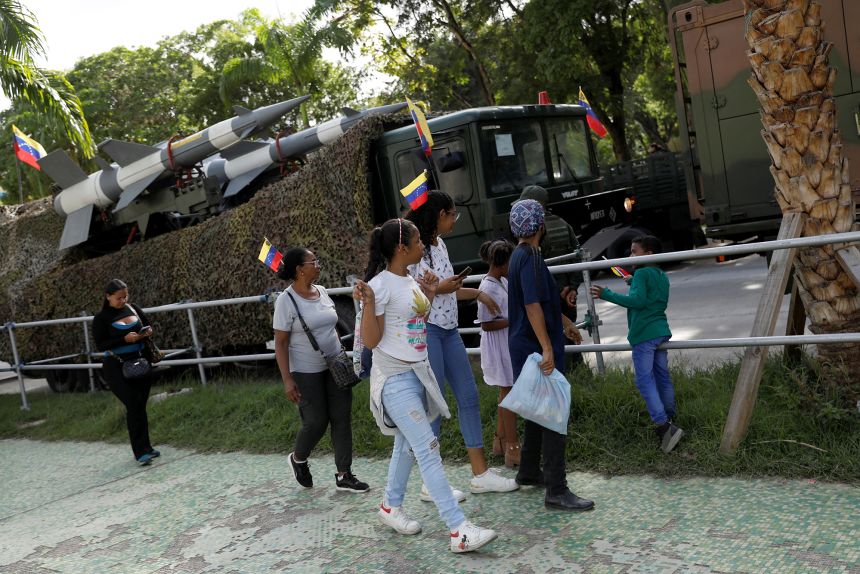
The problem for Venezuela is that while on paper it has a relatively well-equipped military, question marks hang over the maintenance of its equipment and the training of its personnel – not least because the country has suffered more than a decade of economic hardship, one of the world’s highest rates of inflation and a drop in oil production, all made worse by US sanctions.
Partly due to this economic collapse, about 7.9 million Venezuelans – many of them young people of military service age – have left the country, according to UNHCR data.
Though the government “recently resumed modest maintenance and modernization efforts,” according to a 2024 report by the International Institute for Strategic Studies (IISS), these years of underinvestment have taken their toll.
“The FANB has a rather low level of operational capability and asset availability, partly because they’ve been through more than a decade of economic crisis in the country,” Andrei Serbin Pont, an analyst specializing in defense at the CRIES think tank told CNN.
Military and militia: In numbers
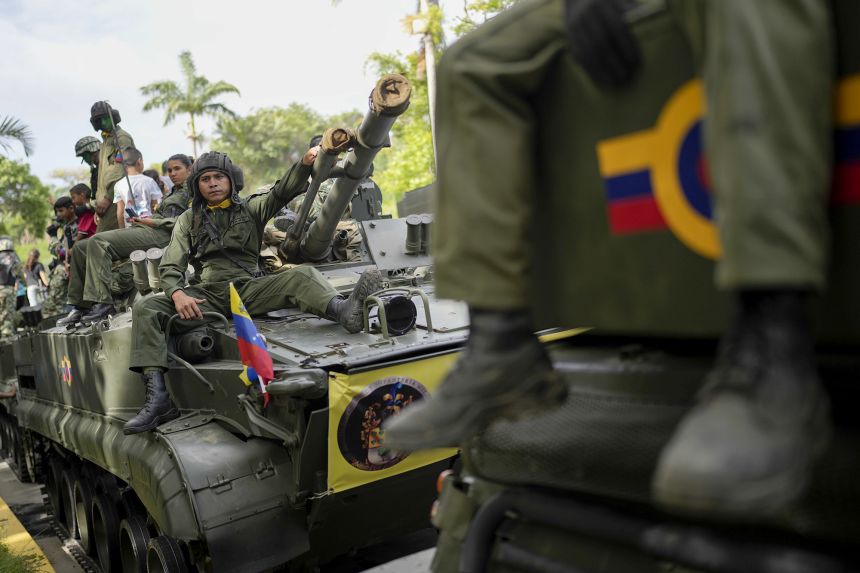
Currently, the FANB has about 123,000 active personnel – Army (63,000), Navy (25,500), Air Force (11,500), and National Guard (23,000), according to the IISS. These are supplemented by a further 8,000 reservists.
In addition to its regular military units, Venezuela can call on the Bolivarian Militia – a reserve force made up of civilians created by Chávez and named after Simon Bolivar, the revolutionary who secured the independence of numerous Latin American countries from Spain.
However, the true size of the militia is opaque. Prior to the recent US build-up, the IISS estimated its number at 220,000, but in August Maduro claimed he would deploy 4.5 million militiamen in response. Weeks later he said he expected to call up a total of 8.2 million – though experts have called into question that number as well as the quality of their training.
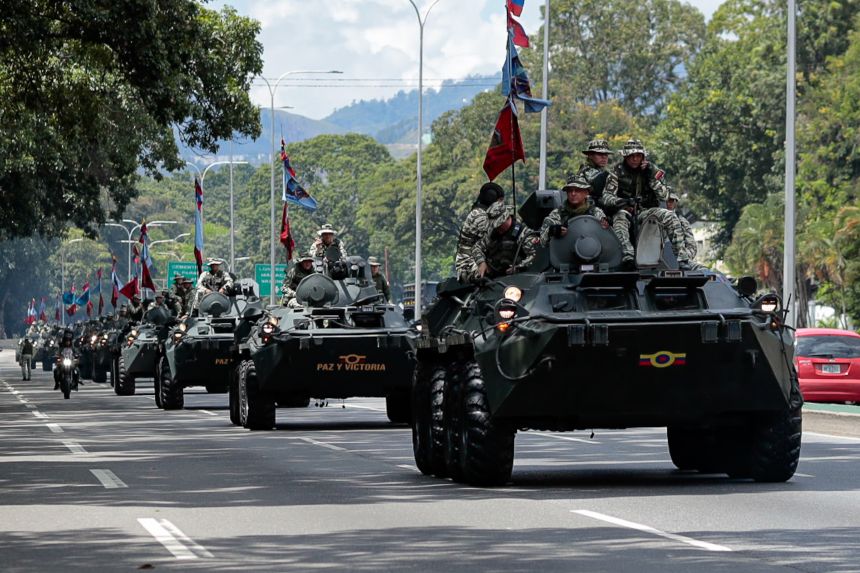
Manpower: With its 63,000 members, Venezuela’s ground forces account for the greatest chunk of its active personnel. They also have the longest history and are most politically aligned with the Venezuelan government.
In addition to Chávez, both the current interior minister, Diosdado Cabello, and the defense minister, Vladimir Padrino López, passed through the army – and Padrino is still an active general-in-chief.
One indicator of how entwined the government and army have become is the unusual number of generals and admirals, with promotions being doled out for political loyalty. In 2019, that number was estimated at about 2,000 by Admiral Craig Faller, then chief of the US Southern Command, in a speech to the US Congress. “More than in all of NATO,” he pointed out. (In comparison, in 2025, the US had about 850 for an Armed Forces 10 times larger).
“Ecuador is a convent, Colombia is a university, and Venezuela is a barracks,” goes an old saying, attributed to Bolívar, that sums up the relationship of Venezuelans with the army.
Weaponry: Notable systems bought from Russia in recent years include 92 T-72B1 tanks – similar to those being used in Ukraine – and 123 BMP-3 infantry fighting vehicles, which equip the armored brigades alongside 81 AMX-30 tanks previously acquired from France, according to the IISS. Artillery systems include the Russian Msta-S self-propelled howitzer and Smerch rocket launchers.
Led by: The Operational Strategic Commander of all of Venezuela’s armed forces is Domingo Antonio Hernández Lárez. His brother, Major General Johan Alexander Hernández Lárez, is in charge of the army.
Air Force: High standard
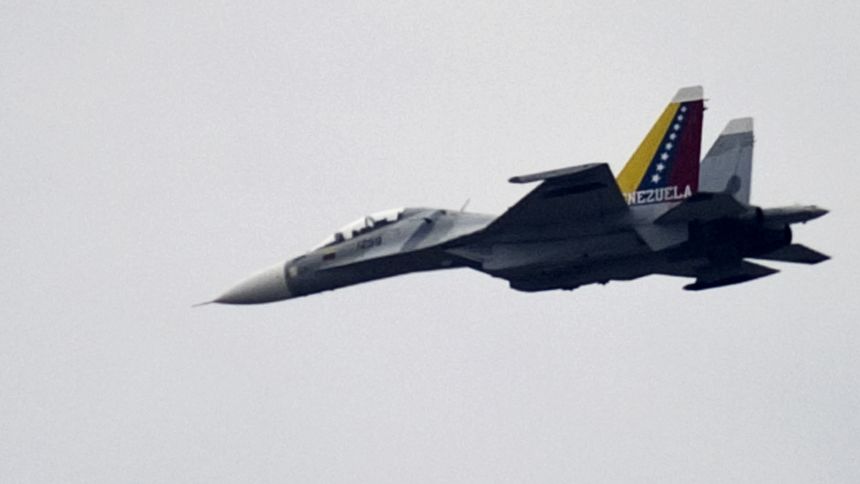
Manpower and weaponry: With 11,500 members, the Bolivarian Military Aviation, or Air Force, is the smallest of the country’s forces but takes pride of place due to the acquisition of Russian equipment that has set it apart among regional competitors in the Caribbean and most of Latin America.
At the center of these are the Sukhoi Su-30MK2s, high-performance twin-engine fighters that, even though developed in the 1980s by the Soviet Union, are unmatched in Latin America.
In mid-September, the FANB shared videos of two of its Su-30s armed with Kh-31 anti-ship missiles, also Russian-made, in a show of what remains their most advanced weapons system.
Venezuela is thought to have had 24 of these at one point, but at least three have crashed, according to the IISS. The Venezuelan NGO Control Ciudadano says the accidents highlight “problems of system obsolescence and of maintenance and lack of spare parts.”
The Su-30s coexist with a few old US F-16 fighters that Venezuela bought before Chávez came to power.
Venezuela also has Russian built air defenses that include 12 batteries of long-range S-300 missiles; 9 Buk systems and 44 Pechora, both medium-range; and numerous portable Igla-S launchers, according to the IISS.
These defenses, while advanced, would likely be the first targets of an opponent if a conflict were to break out, said Serbin Pont, the CRIES analyst.
Led by: Major General Lenín Lorenzo Ramírez Villasmil.
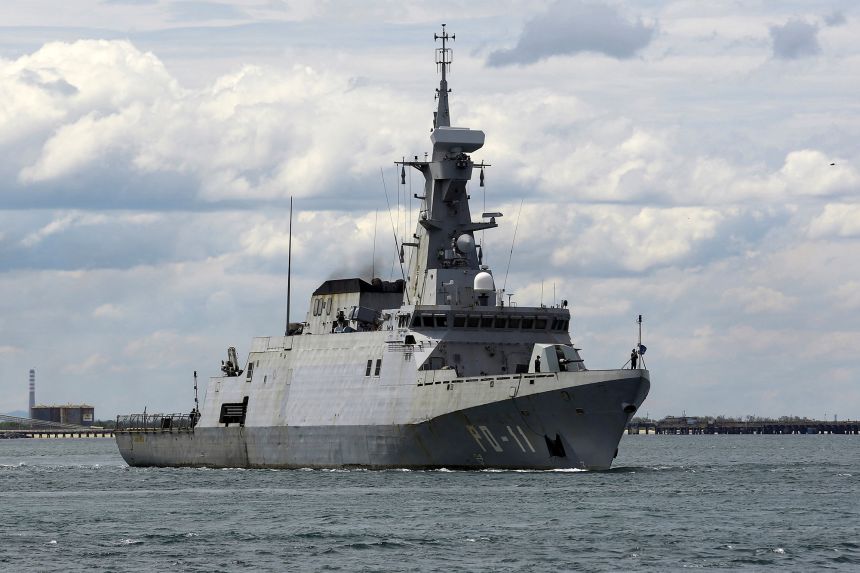
Manpower and weaponry: The Bolivarian Navy, whose 25,500 members are tasked primarily with operations in the Caribbean, has lagged the other services in terms of arms purchases in recent decades.
It currently operates only one Mariscal Sucre-class frigate (manufactured in Italy) and one Type-209 submarine (manufactured in Germany) in its sea fleet, according to the IISS. It also has nine oceanic and coastal patrol vessels, including four purchased from Spain.
“The Navy lost many of its assets that it had prior to (Chavez), and these were not fully replaced. The corvettes bought from Spain were never equipped with weaponry, until a few years ago when Chilean and Iranian anti-ship missiles were installed, but they do not have viable anti-aircraft defense systems,” said Serbin Pont.
Led by: Admiral Ashraf Suleimán Gutiérrez.
And the militias?
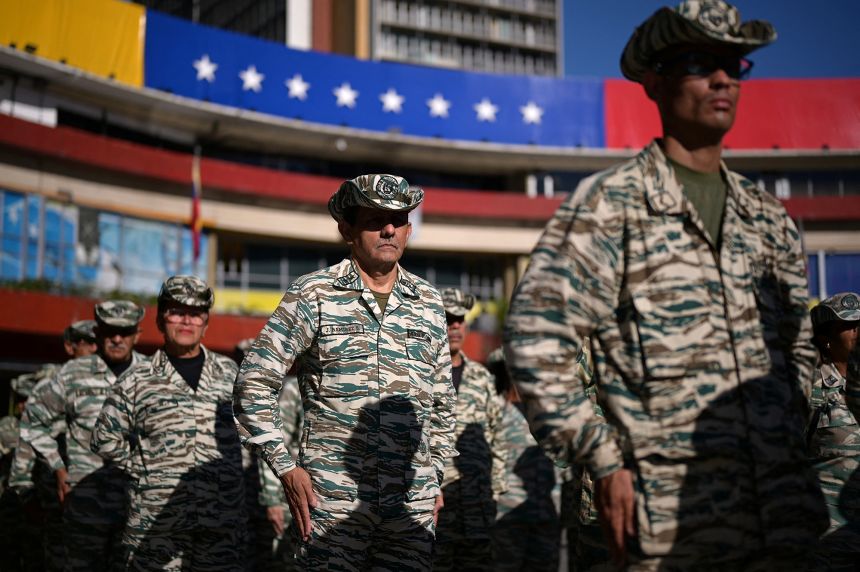
In recent weeks, Maduro has repeatedly played up the role of the Bolivarian Militia, formed in 2008 by Chavez to provide a loyal paramilitary force that, while technically part of the Armed Forces, comes directly under the control of the president.
As an umbrella term for various groups that range widely in experience and ability, a definitive account of how many people belong to the Bolivarian Militia is hard to come by.
Days after news of the US naval deployment broke, Maduro said in August he was going to “activate … more than 4.5 million militiamen” taken from “all the factories and workplaces of the country.”
“Missiles and rifles for the working class, so that they may defend our homeland,” he said.
He later suggested there were more than 8 million militia members.
Aside from the discrepancies in number, Serbin Pont said that while there were some traditional militias composed of reservists with military experience, most of the groups showcased by the government on television and social media were too inexperienced to play a decisive fighting role.
“Those people do not have sufficient training. There is no real armed structure to mobilize those elements, and those elements would not be effective in combat,” he said.
Their real use, Serbin Pont suggested, was serving “as an intelligence network and a repressive threat against the civilian population precisely because they are based on a network that penetrates the whole of society.”