
Portland Foreside Development price tag rises above $1B
 yacht-ready marina alongside the 10-acre site. They also spent $100 million to build a four-story Sun Life office building and move a historic factory storehouse brick by brick to a spot closer to the waterfront, where it now houses the restaurant Twelve.
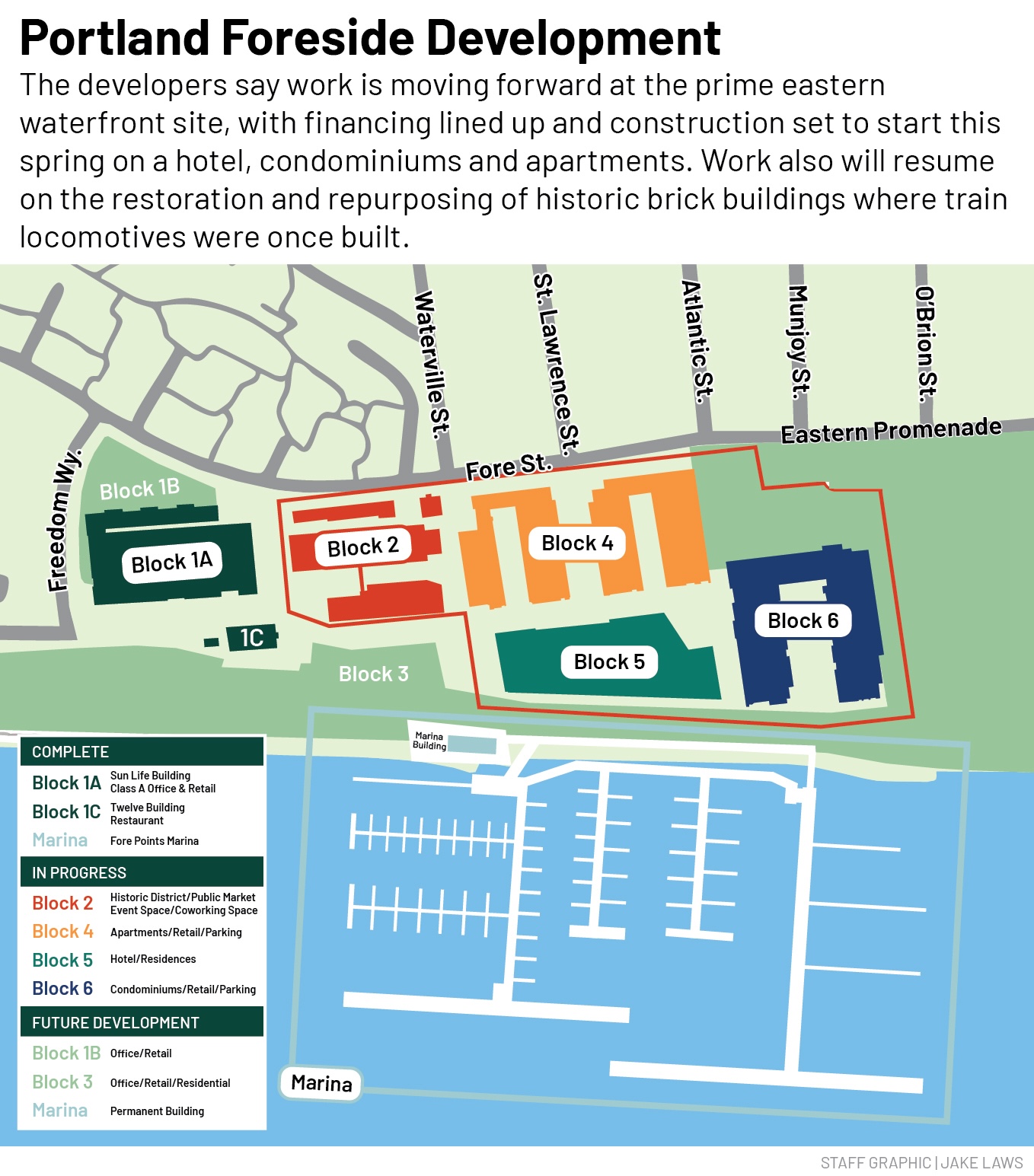
This spring, the third phase of the project is set to ramp up. It would add a 130-room hotel with 38 residences, a 132-unit condominium building and a 200-apartment complex, including 20 units that would be affordable under the city’s inclusionary zoning rules. The work is expected to be finished by 2029 or early 2030, said Casey Prentice, managing partner of Portland Foreside Development Co.
 The Sun Life office building, left, and the historic Portland Co. building, which houses the restaurant Twelve, are part of the Portland Foreside development. (Brianna Soukup/Staff Photographer)
Now expected to cost $970 million, the latest phase was initially estimated at $660 million when it got site plan approval in 2023 and it was intended to be completed this year.
The cost jumped when the developers decided to upgrade the construction quality of the project based on extensive market research among potential future tenants, Prentice said.
“We’re building for the people who are looking to be here and the quality that they’re seeking,” said Prentice, who also is CEO of the Prentice Organization, a hospitality and real estate company that includes the Chebeague Island Inn, Maine Harbor Club on House Island and Evo, Twelve and Douro restaurants.
He didn’t provide details on the planned construction improvements.
Prentice emphasized the challenges the project has overcome — including neighborhood opposition, a pandemic shutdown, lost financing, inflation and surging interest rates — since he and his partners paid $14 million for the former Portland Co. locomotive foundry site in 2013.
He also lamented the lack of support and understanding in the wider community for his company’s sustained efforts, especially in a city where many smaller developments have stalled out. He couldn’t convince city officials to back tax breaks of any kind, he said.
“People don’t understand the scale and complexity of this project,” Prentice said. “I’ve been working on this since 2009. Through all of that we’ve continued to move the project forward and are now in a strong position.”
MAKING THE NUMBERS WORK
Prentice and his current partner, Kevin Costello, are doing better than some who are forging similar projects.
Across the harbor in South Portland, developers have been trying since 1999 to recast a 30-acre former World War II shipyard property into some form of housing, hotels and other commercial uses but havent’ won community support or city approvals.
PK Realty Management withdrew its Yard South proposal in late 2024 that would have added about 1,000 residential units, including 100 subsidized, a waterfront park and other community amenities within 15 to 20 years.
“It’s just become really apparent that the city doesn’t have a process in place to manage a project of this scope and scale,” developer Jennifer Packard said at the time. “It’s a systemic issue and it exists across Maine.”
For the Portland Foreside project, expectations were high from the start because of the site’s historical importance, waterfront location and potential to help solve a housing crisis that has been escalating.
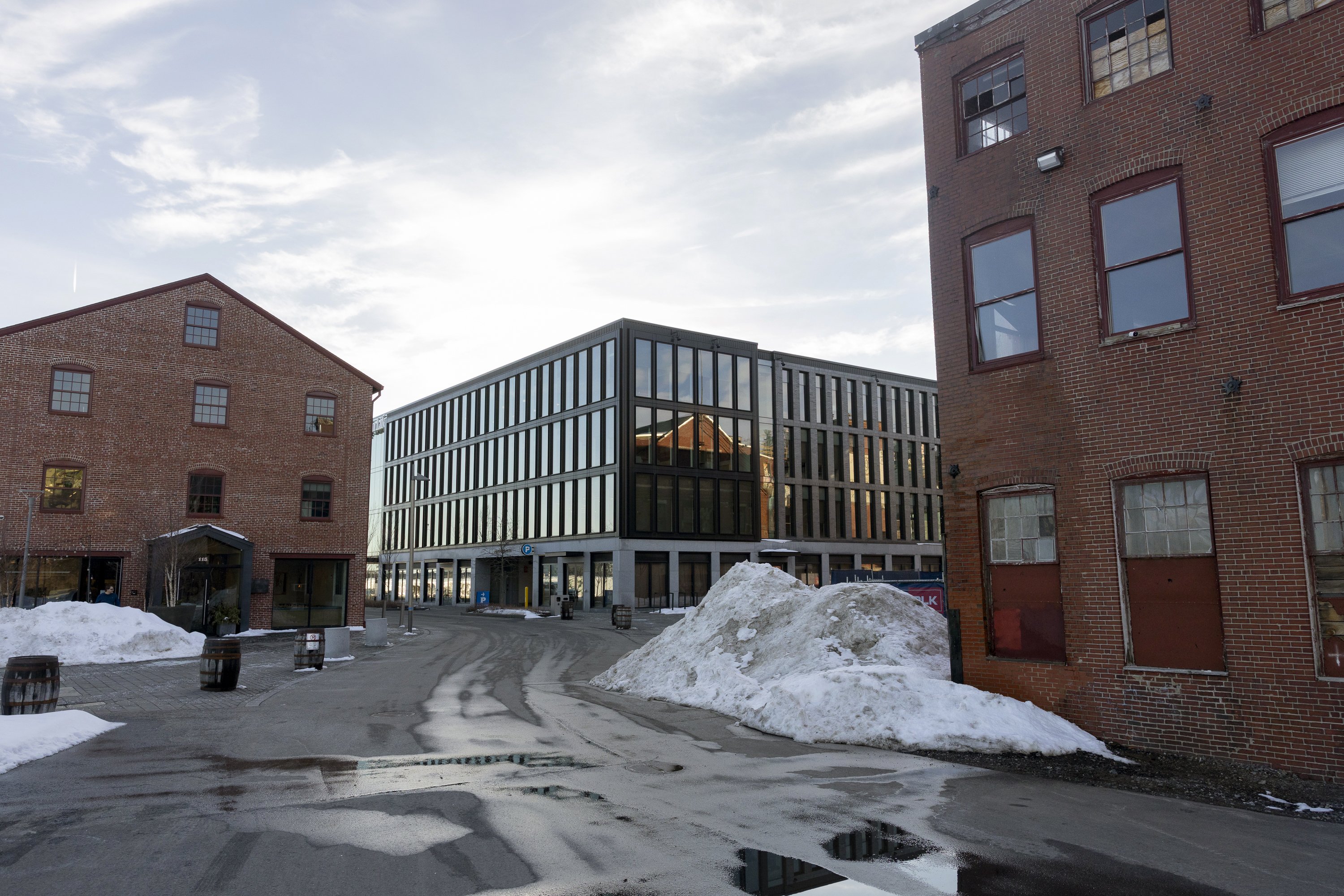 The site being developed by Portland Foreside Development Co. including the historic Portland Co. building, at left, the new Sun Life building, center, and the historic brick buildings, at right, in Portland on Wednesday. (Brianna Soukup/Staff Photographer)
“I think everybody expected it would move along faster than it did,” said David Marshall, a real estate broker who was a city councilor from 2006-15, when the project was in its early stages.
“I don’t think anyone expected some of the challenges they have faced,” Marshall said. “It’s a huge development. It’s really building a whole new neighborhood.”
Marshall said it’s unfortunate that most of the housing provided at Portland Foreside won’t be affordable to lower- and middle-income residents, but he believes any additional housing is a plus for the city.
“Most Portlanders aren’t going to be able to afford it, and most of the people who can won’t live there year-round,” Marshall said. “But what the market is making possible right now is luxury housing or heavily subsidized housing. Otherwise, it’s really challenging right now for developers to make the numbers work.”
OTHER FEATURES OF PHASE 3
In addition to a hotel, condominiums and apartments, the third phase of Portland Foreside will include a $20 million natural gas-fired cogeneration plant, which was permitted by the Maine Department of Environmental Protection in July.
Built under the apartment complex, the plant will provide heat, hot water and electricity to the entire property, Prentice said. The company has sought an advisory ruling from the Maine Public Utilities Commission that it wouldn’t be considered a public utility under state law.
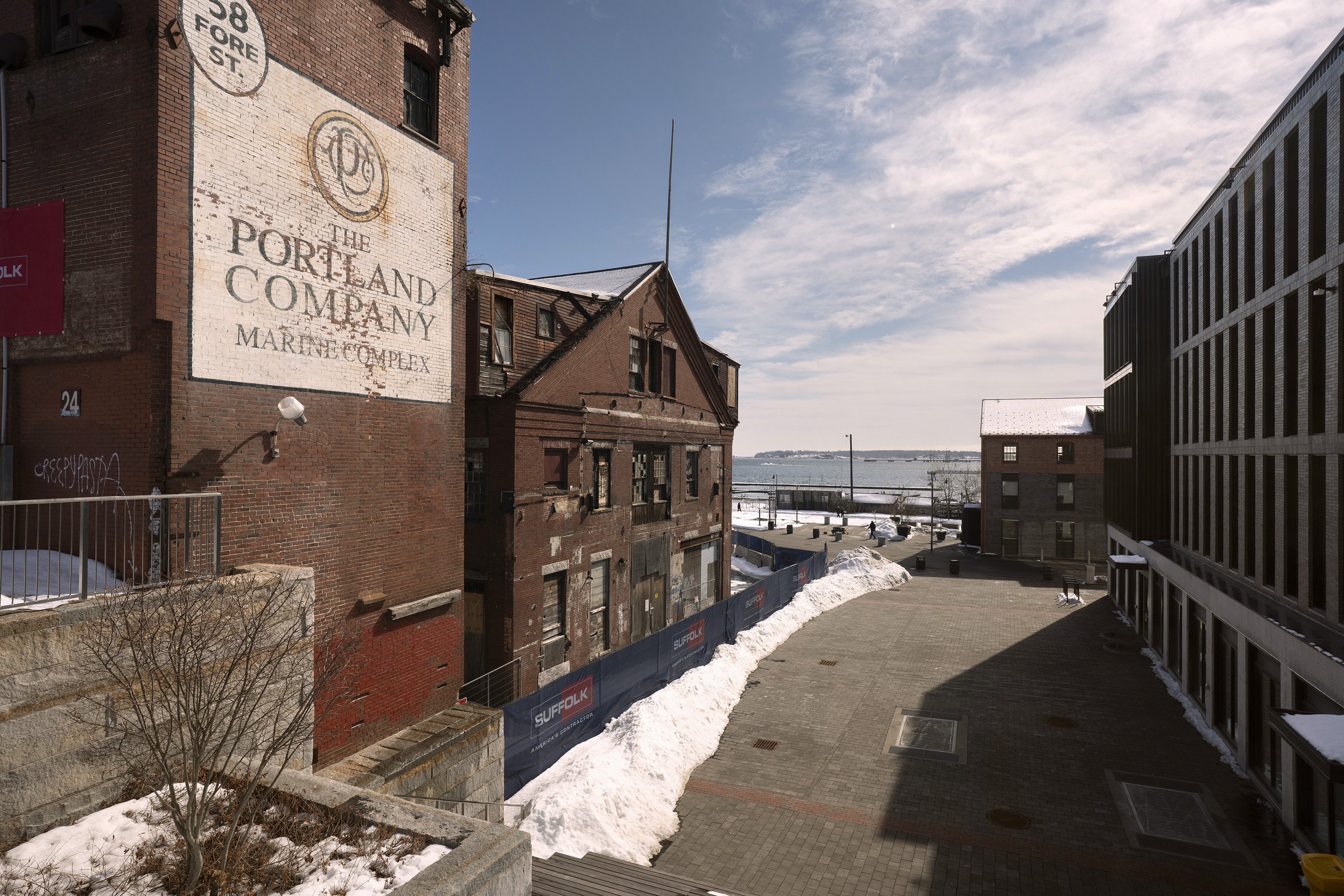 This large brick warehouse is set to be converted into a public market and event space. (Gregory Rec/Staff Photographer)
The latest phase also will resume the restoration and conversion of a historic 13,000-square-foot brick warehouse into a year-round public market and event space with co-working space on the third floor.
The conversion of the divided building started in 2019 and shut down during the COVID-19 pandemic, scuttling financing and delaying a restart until this spring, Prentice said.
Multiple liens have been placed on the 10-acre property over the years for payments the developers owed to contractors, consultants and the municipal tax collector. Most were settled in a matter of months.
LIENS COMPLICATE DEVELOPMENT
Pittsfield-based Cianbro, which worked on the marina, filed a $1.6 million lien in 2019 that went to court and was settled in 2022 through binding arbitration. Cianbro didn’t respond to requests for an interview.
The only outstanding lien on record at the Cumberland County Registry of Deeds is a $1.2 million claim filed Feb. 24 by Solomon Cordwell Buenz & Associates, an architecture and urban design firm in Boston. The work was done May 1, 2024, through Nov. 25, 2025.
“A project of this size will always have challenges with consultants and contractors,” Prentice said. “It’s not uncommon in the industry. It’s just business.”
Prentice said Solomon Cordwell Buenz is still working on the project; the firm didn’t respond requests for an interview.
“Liens are absolutely part of the ordinary course of business, especially for development projects,” said Erin Cusenbary, a professor and legal director of the Business & Law Clinic at the University of Maine School of Law.
A lien establishes a financial interest in a property, Cusenbary said. If the property is ever sold, the lien holder is to be paid from the proceeds. It’s a good sign when liens are resolved and discharged in short order.
“If there was a huge stack of them, it would be concerning,” she said. “In many cases it’s just part of doing business. It’s a way of ensuring a contractor will be paid.”
Liens may be placed on properties for a variety of reasons, such as when there’s a dispute over work that’s been done or not done; if a contractor hasn’t paid a subcontractor; or when project financing is expected but hasn’t come through yet, said Andrew Kaufman, a professor and director of the law school’s Business and Transactional Law Certificate Program.
 Casey Prentice is the managing partner of the Portland Foreside Development Co., which is developing a 10-acre property along the Portland waterfront. (Gregory Rec/Staff Photographer)
WORK ALREADY UNDERWAY
Now, banners for Suffolk Construction, general contractor for the third phase, hang from the old brick buildings that will become a public market. Site work was finished last year for the hotel, condo and apartment buildings, Prentice said.
Financing has been lined up and should close within 90 days, he said, including clean energy funding from the U.S. Environmental Protection Agency and over $330 million in private capital. Construction activity should be visible by June.
The cost and timeline to develop two remaining blocks in the project are unclear. The city also expects the developers to construct a permanent building for Fore Points Marina to replace the temporary structure it has been using, said Kevin Kraft, director of the planning department.
When it’s completed, the entire project will provide 1.4 million square feet of living and working space in an area comparable to the neighboring Old Port district, Prentice said.
“Moving into this phase represents the culmination of more than 15 years of work and a long-term vision for what this part of Portland’s waterfront can become,” he said.
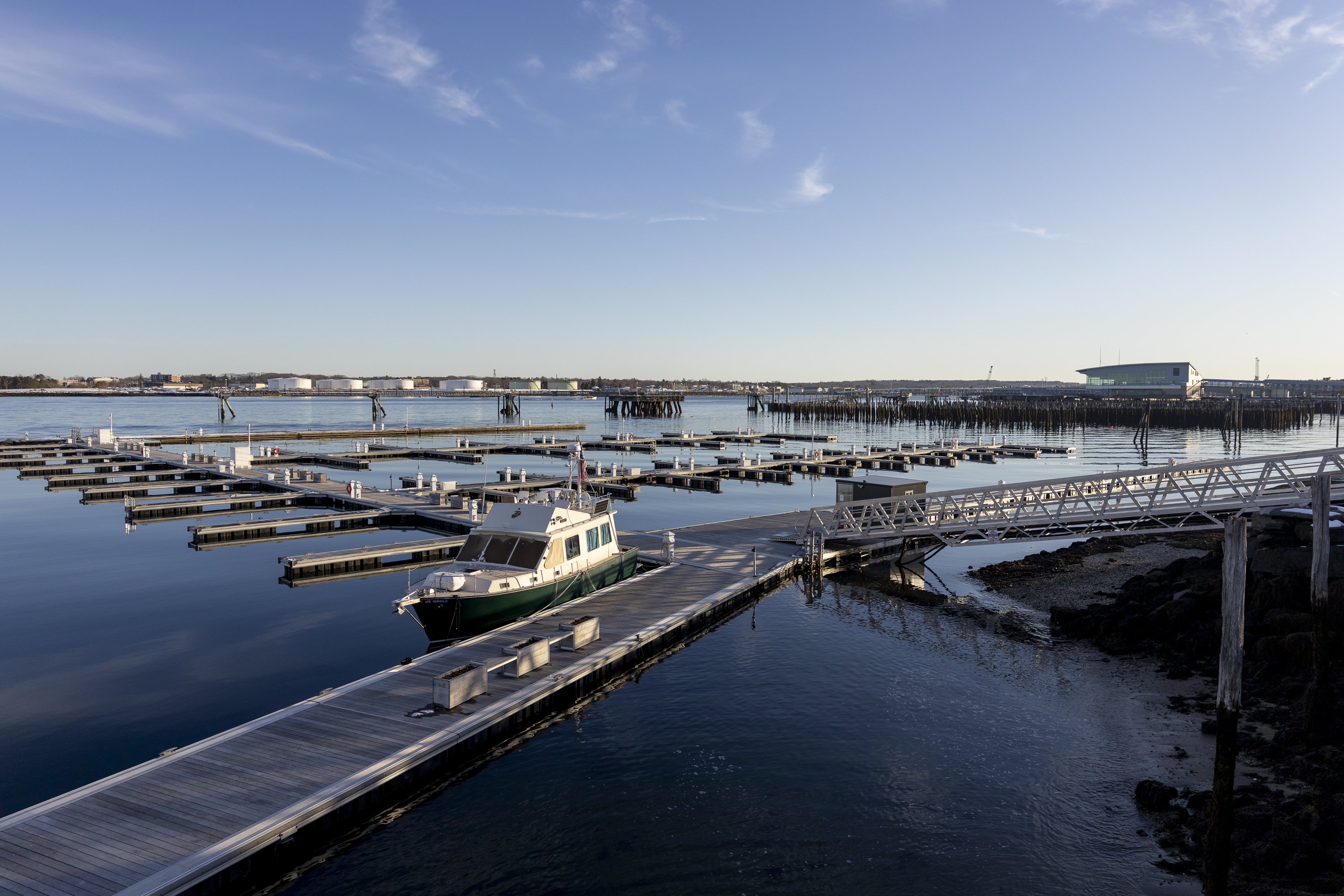 The Fore Points Marina in Portland on Wednesday. (Brianna Soukup/Staff Photographer)